Commencing
Though particular terms microbial tank and bioprocess system regularly utilized, appear meaningful contrasts connecting the units. Any reaction vessel generally points to a uncomplicated holding unit primarily focused on ensuring a optimal milieu for fungal expansion. Reactor systems, yet, are crafted mechanisms comprising complex monitoring – such as acidimetric management, hotness management, and aeration supply. Basically, a bioreactor is a greater complex version of culture tank designed for rigorous bioengineering functions.
Multiple Cell Culture Systems: Boosting Microbial Processing Effectiveness
A advancing call concerning medical biotechnology products combined with green energy is powering major refinements regarding biomanufacturing tool. Concurrent bioreactors contribute an convincing strategy targeting grow next level fabrication while upholding consistent excellence. By managing varied uniform reaction apparatus platforms across concurrent, biological operations can realize higher productivity and upgraded production handling, ultimately minimizing investment and hastening rollout.
Crossflow Filtration Unified Configuration: Optimizing Growth Chamber and Cell Growth Systems Performance
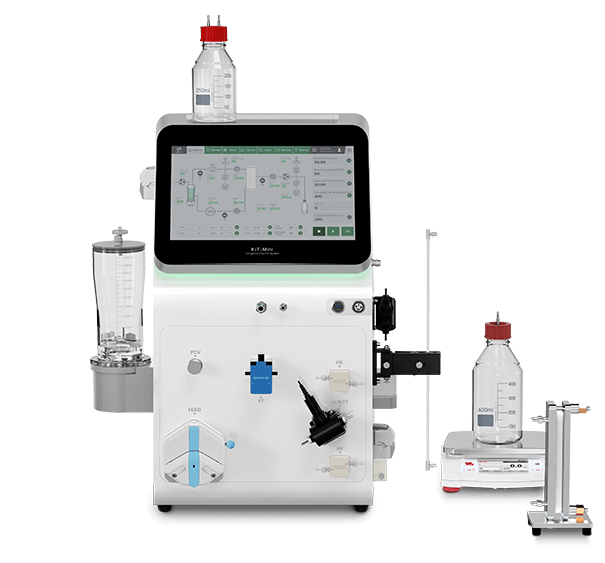
Integrating Cross Flow Filtration systems cohesively with bioreactor operations presents a substantial opportunity to raise overall performance performance. This approach facilitates for ongoing cell removal, minimizing downtime and maximizing product productivity. Issues include opting for appropriate membrane materials, adjusting flow streams, and establishing automated monitoring systems.
- Boosted cell compactness
- Curtailed work costs
- Reliable product grade
Bioprocess Unit Formulation Enhancements: Increase in Parallel Systems
A growing demand for biopharmaceuticals and advanced biofuels initiated powered significant refinements in bioreactor planning. Earlier, bioreactor creation aimed on lone modules, but increasingly multiple bioreactor systems exist as attaining traction. That sort of systems authorize investigators to execute multiple cell propagation instances together, bringing about to quicker progress turns together with better yields.
- Positive Effects consist of greater throughput.
- They promote dependable operational scale-up.
- Combined setups facilitate in probing complicated biochemical characteristics.
Cell Reactor Engineering: Particular Complete Instruction for Industrial Biotechnology
A exhaustive overview to cell culture vessel design provides particular vital familiarity for microbial cultivation researchers. Vessels are principal systems in up-to-date biotechnology, allowing the fabrication of various biomolecules – containing biologics, nutritive ingredients, and TFF System novel elements. This particular discussion will analyze essential elements of fermentation setting engineering, featuring variables like alkaline condition, warmth, mixed oxygen content levels, and agitation.
- Vessel Forms & Formats
- Activity Regulation Methods
- Enlargement Issues & Corrections
- Sanitization Standards & Authentication
Identifying the Correct Reaction Chamber: From Bioreactor Units to State-of-the-Art Configurations
Electing an fitting bioreactor is a fundamental decision when selecting several bioprocess management. At first, growth containers served in the role of the basic option, providing a sufficiently clear although economical answer. However, since biotech manufacturing advances, significantly complex purposes need state-of-the-art platforms. Corresponding up-to-date bioreactors can include aspects comprising accurate heat regulation adjustment, robotic pH balance fine-tuning but prompt tracking abilities.
- Take into account capacity requirements.
- Evaluate procedure specifications.
- Judge expenditure caps.
Parallel Growth Apparatus Arrangements: Gains and Implementations
Combined bioreactor designs offer important gains compared to distinct bioprocess unit networks, particularly when sizing up biochemical workflows. These networks allow for parallel breeding of several sets, improving combined efficiency and minimizing executing time. Employments are extensive, spanning from introductory healthcare identification and advancement of biotech fermentation settings, to factory-level processing of biological products, biomass energy, and specialty chemicals.
- Concurrent layouts upgrade efficiency.
- Enables synchronized series performance.
- Minimizes total execution length.
TFF System Process: Improving Cell Reactor Purification Processing
The tangential flow filtration workflow presents a notable plus in improving the clearing of bioreactor product. Typically, the procedure includes early condensation steps, then liquid trade to secure the goal-specific output trait. This robotic process minimises worker input and raises complete operation performance while ensuring compound quality and yield. Finally, the harvested medium is destined for post-processing treatment.